

Housing Choice Voucher and Moderate Rehabilitation Programs
Housing Choice Voucher Program
The Housing Choice Voucher Program helps low-income families afford housing in the private market. Program participants can choose any eligible housing unit, including townhouses, single-family homes and apartments with rent partially covered by a subsidy paid directly to the landlord. Families receiving assistance pay approximately 30% of their adjusted gross monthly income for rent and utilities, subject to payment subsidy standards. As a family’s income changes, the portion of the family’s rent share may change. To be eligible for the HCV Program, applicants must qualify under HUD income limits and other program eligibility criteria. Family income and composition will be re-certified annually while on the program.
Moderate Rehabilitation Program
The Moderate Rehabilitation Program provides project-based rental assistance for low-income families. Families receiving assistance pay approximately 30% of their adjusted gross monthly income for rent and utilities, subject to payment subsidy standards. As a family’s income changes, the portion of the family’s rent share may change. MOD Rehab assistance is different from a voucher, because the assistance stays with the building. You can have rental assistance while you are living in the MOD Rehab building, but you will lose your rental assistance if you move from the property. If MOD Rehab is available in your area, it may be faster to receive needed assistance under MOD Rehab than HCV. To be eligible for the MOD Rehab Program, applicants must qualify under HUD income limits and other program eligibility criteria. Family income and composition will be re-certified annually while on the program. MOD Rehab is only available at specific properties in specific cities.
Waiting List
The HCV and MOD Rehab waitlists are now open.
- Waiting list position: To check your position on the waiting list, visit waitlistcheck.com.
- Changes while on the waiting list: If applicants have any changes while they're on the waiting list, a change form must be completed. Change forms may be submitted electronically or by requesting one from the field agent to be mailed in.
To Apply for Housing Choice Voucher
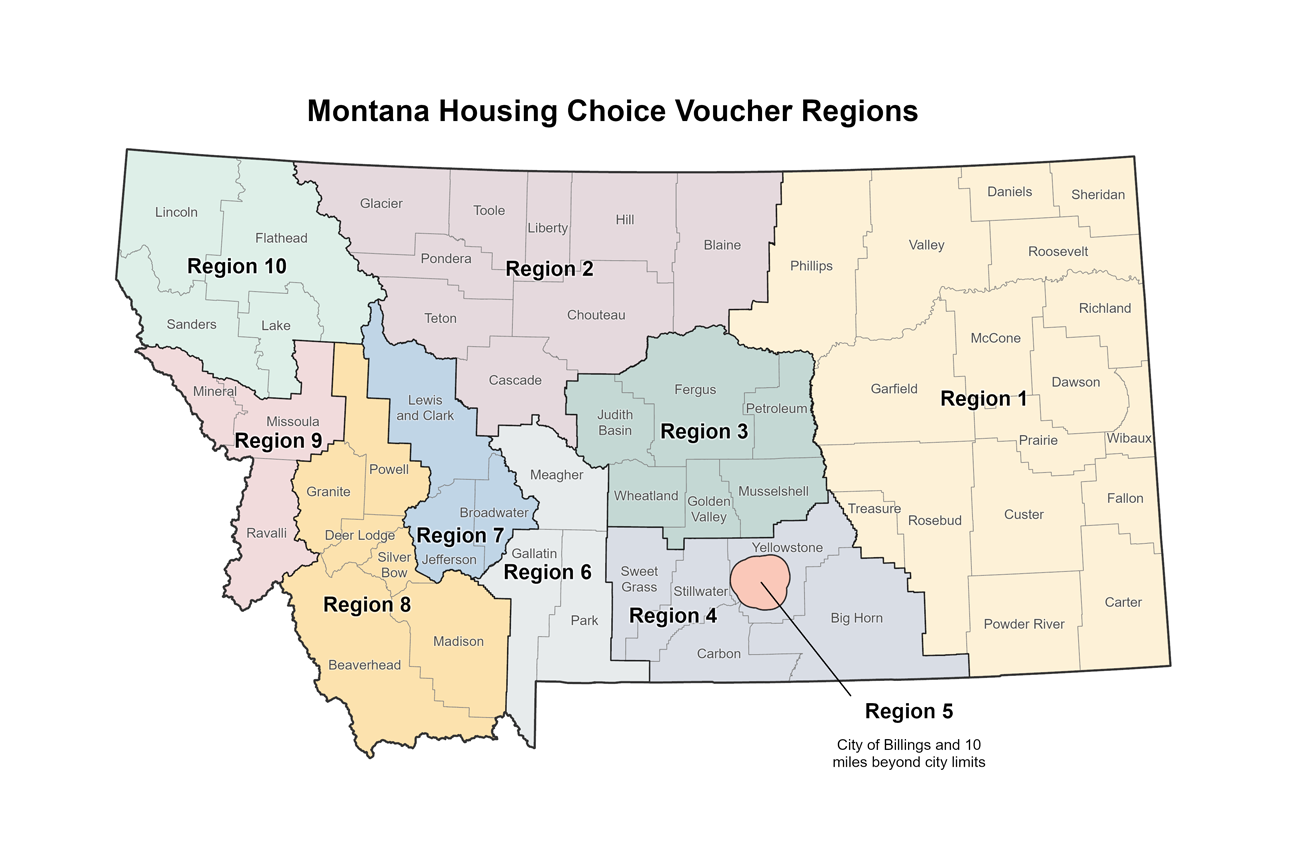
Before you apply, use this map to determine your region.
Before you apply, use this map to determine your region. This map may also be downloaded and printed.
Regions for Housing Choice Voucher Program
To Apply for Moderate Rehabilitation
Regions for Moderate Rehabilitation Program
Eligibility
To be eligible for the HCV or MOD Rehab Program, applicants must qualify under HUD income limits and other program eligibility criteria. Family income and composition will be re-certified annually while on the program.
Families receiving assistance pay approximately 30% of their adjusted gross monthly income for rent and utilities, subject to payment subsidy standards. As a family’s income changes, the portion of the family’s rent share may change.
Income Limits
HUD-published income limits are updated annually. Income limits vary among counties.
Frequently Asked Questions
Q: How long does an applicant have to wait to receive assistance?
A: Commerce’s waiting list is organized by preference, date and time of application, based on the regional waiting list selected by the applicant. The estimated time to receive a voucher depends on many factors: the date and time of the application, persons leaving the program, funding availability and the number of people currently on the waiting list.
Q: Who are the field agencies?
A: Due to geographical limitations, Commerce enters into a contractual relationship with nonprofit partners throughout Montana to carry out HUD requirements for administering many of the rental assistance programs. These contractors are known as field agencies.
For a list of field agencies and the counties they serve, see the list of field agencies.
Q: How does the Housing Choice Voucher Program work?
A: If a family receives a voucher, they choose their own rental home from available rentals in their community. The family pays approximately 30% of their adjusted gross monthly income in rent, and the remainder is paid by the HCV Program to the property owner.
Additional Program Information
- IRS Tax Prevention English
- IRS Tax Prevention Spanish
- Assistance Connect
- Authorization for the Release of Information/Privacy Act Notice
- Informal Hearing Procedures
- MDOC VAWA Emergency Transfer Plan
- Minimum Rent Hardship Waiver
- Tenant Information Form
- Utility Allowances
- Disability Verification
- 811 Referral Form
- Reasonable Accommodation Form
- Expanding Housing Opportunities
Reasonable Accommodation
Disability Status and Right To Reasonable Accommodation
If you have a disability as outlined under Section 504 of the Americans With Disabilities Act or state or local fair housing laws and require an accommodation that would allow you to live and use your apartment or access facilities in a manner equal to that of a non-disabled tenant, you may qualify for a reasonable accommodation. For example, if you need:
- A structural change or repair in your apartment, or a special type of apartment;
- A change or repair in some other part of the housing development or housing authority facilities; or
- A change in our rules, policies or how we do things (e.g., how we communicate with you or give you information)
You may request a reasonable accommodation from your local field agent representative, and they will direct you on how to proceed with the process.
Visit our page on fair housing for more information.